Right-size the axis
Oversized rails, screws and motors increase material use and inertia. The first checkpoint is load, moment and acceleration validation.
The sustainability roadmap focuses on energy, material use, repairability and documentation. A servo axis may reduce compressed-air or hydraulic losses in one machine while increasing electronic complexity in another. An IE3 or IE4 motor can reduce energy cost only when duty cycle, load profile and drive strategy justify the choice. A rail guide with longer L10 h can still fail early if lubrication access is poor. For that reason, each recommendation ties environmental language to measurable operating assumptions, not broad claims.
Oversized rails, screws and motors increase material use and inertia. The first checkpoint is load, moment and acceleration validation.
IE3 / IE4 choices are evaluated with operating hours, speed profile and drive losses rather than selected by label alone.
Nameplate, fault code and measured load data prevent unnecessary replacement of drives or motors that are not the root cause.
Accessible grease points, sealing and maintenance interval notes protect the L10 h assumption used during sizing.
CAD, parameters and wiring notes make later control upgrades easier without replacing the full mechanical axis.
A lifecycle file captures why a component was selected, how it should be maintained and when modernization makes sense. It includes the assumed payload, speed, stroke, ambient temperature, duty cycle, lubrication approach, controller network and spare strategy. That file helps procurement avoid short-term substitution that silently changes load capacity or thermal margin.
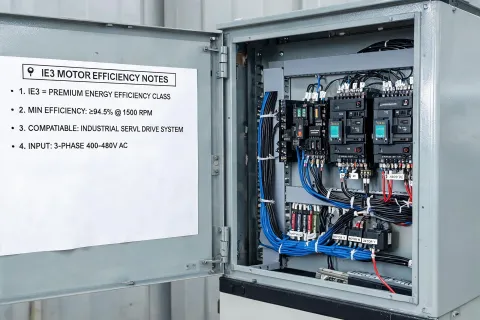
IE3 / IE4 motor packages are compared against hours, torque profile and regeneration opportunity.
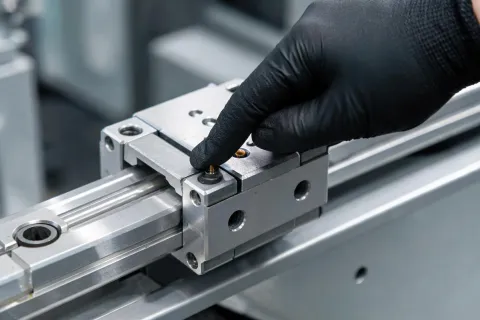
Lubrication path, sealing and replacement access are documented to keep L10 assumptions credible.
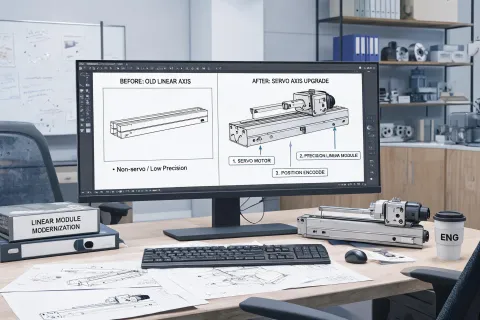
CAD and parameter records make future controller or drive changes less disruptive.
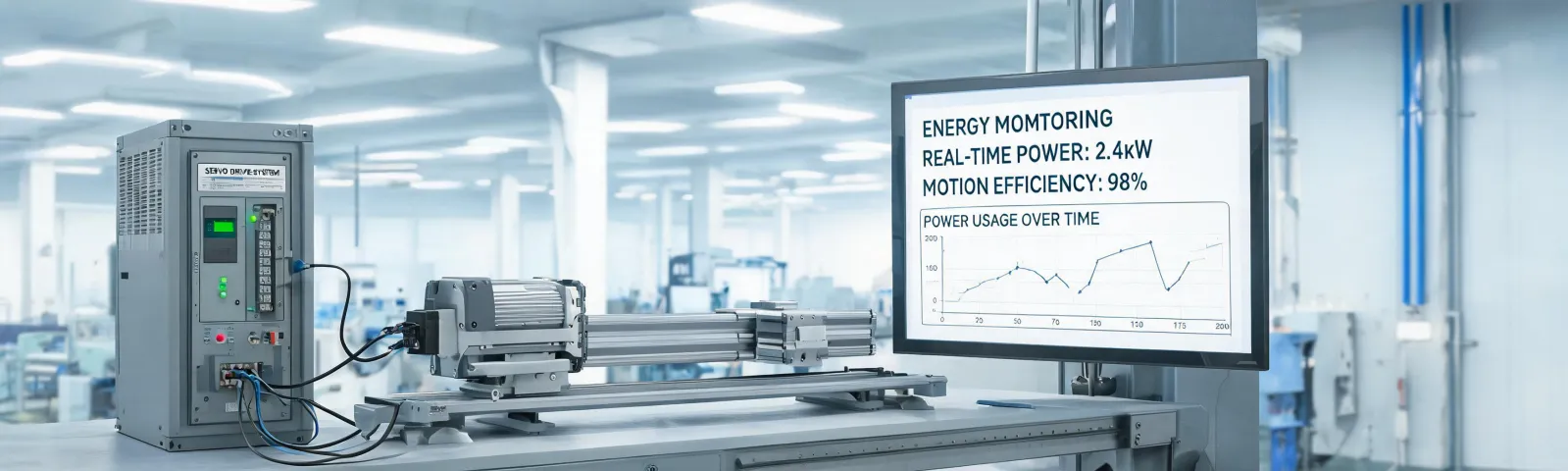
Share operating hours, load profile and maintenance history for a practical lifecycle review.
Request Lifecycle Review